Your Favorite Show Keeps Changing — And Nobody's Keeping Score
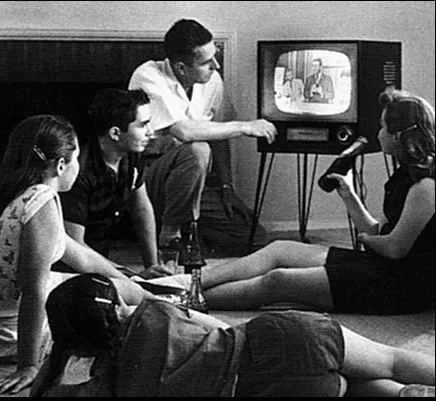
Photo: Evert F. Baumgardner - National Archives and Records Administration., CC0, via Wikimedia Commons
Imagine you spend three years meticulously working through every episode of a long-running drama. You take notes, you cross-reference timelines, you maybe even build a little spreadsheet. You finish. You feel that rare, satisfying completeness. Then, six months later, someone on a fan forum posts a screenshot — and a scene you watched looks completely different from what's currently streaming.
Welcome to one of the stranger anxieties of modern media fandom: the shape-shifting show.
The Edit You Never Approved
Content changes aren't new. Network TV has always had broadcast cuts versus DVD extended editions. Movies get director's cuts. But what's different now is the stealth — and the scale.
Streaming platforms have near-total control over what version of a title lives on their servers at any given moment. There's no physical disc sitting on a shelf that stubbornly holds the original cut. When a platform decides to swap in a newly remastered version, trim a scene for licensing reasons, or replace a song because the music rights expired, they just... do it. No announcement. No changelog. No version number stamped in the corner of your screen.
The music licensing issue alone has quietly mangled dozens of beloved shows. Scrubs, The Wonder Years, Freaks and Geeks, and American Dreams all famously lost significant chunks of their original soundtracks when they moved to streaming platforms, because clearing those songs for digital distribution was either too expensive or too complicated. Entire emotional beats — scenes built around a specific song — suddenly land differently, or don't land at all.
For casual viewers, this is a minor annoyance at most. For the fans who've built their identity around tracking and cataloging these shows, it's something closer to a crisis.
What Archivists and Super-Fans Are Actually Losing
There's a certain type of viewer — and if you're reading AllTM, there's a decent chance you're one of them — who treats media cataloging as something between a hobby and a calling. These are the people who notice when a cold open gets trimmed by thirty seconds. Who can tell you exactly which streaming platform has the best transfer of a 1990s sitcom. Who maintain watch guides, episode databases, and fan wikis that collectively represent thousands of hours of collaborative documentation.
For those communities, a quietly altered episode isn't just annoying. It's a data integrity problem.
When the version of a show that exists on a platform today differs from the version that existed two years ago — and there's no official record of what changed — the entire project of tracking and cataloging that show gets murkier. Fan databases end up with conflicting information. Watch guides reference scenes that have been cut. Discussion threads argue about whether something actually happened in an episode because different users are literally watching different versions.
This isn't hypothetical. It's been playing out across fan communities for years, and it's getting worse as more content migrates exclusively to streaming.
The Remaster Rabbit Hole
Remastering adds another layer of complexity. On the surface, a high-definition remaster sounds like an unambiguous win — sharper picture, cleaner audio, better overall presentation. And sometimes it genuinely is.
But remastering also opens the door to revisionism. George Lucas became something of a cultural shorthand for this problem with his Star Wars special editions, but television has its own quieter version of the same dynamic. Shows shot on film get converted to digital formats, and the choices made during that process — color grading, aspect ratio, even CGI touch-ups — can meaningfully change how a series looks and feels.
Some fans of classic sitcoms have pushed back hard against HD remasters that cropped the original 4:3 frame to fit modern 16:9 displays, cutting off visual gags that were deliberately composed for the edges of the original frame. The 'improved' version was, for those viewers, objectively worse — just with higher resolution.
And here's the kicker: in many cases, the original version simply isn't available anymore. The platform made a choice, and that choice is now the only option.
Canon in the Age of Infinite Versions
All of this puts real pressure on something fans care about deeply: canon. The idea that there's a definitive, authoritative version of a story that represents what the creators actually intended.
Canon has always been a somewhat slippery concept — showrunners contradict themselves, writers' rooms change, and what was 'official' in season two sometimes gets quietly overwritten in season five. But at least within a single episode, you could generally point to this cut and say: this is the thing.
Streaming erodes even that. When a platform can alter an episode without notice, and when there's no physical release preserving the original, the very concept of a definitive version starts to feel unstable. Whose cut is canon — the original broadcast version, the streaming version from 2019, or the remastered streaming version from 2023?
For media historians and archivists, this is genuinely alarming. A lot of what we know about early film and television history comes from the painstaking preservation of original materials. If the dominant distribution format is now a server that gets silently updated, future researchers are going to have a much harder time reconstructing what audiences actually watched.
So What Can Fans Actually Do?
Honestly? Not a lot, on an individual level. You can't strong-arm a streaming platform into maintaining version histories. But the fan community has always been resourceful.
Detailed episode databases — the kind that note runtime discrepancies between broadcast and streaming versions — are more valuable than ever. Fan wikis that document known changes to specific episodes serve a real preservation function. Physical media, for all its inconvenience, remains the only reliable way to lock down a specific version of a show at a specific point in time.
At AllTM, tracking titles means tracking all of them — including the versions that quietly disappear when a platform decides to push an update. The completionist's dilemma isn't really about whether you've seen every episode. It's about whether the episodes you've seen will still be the same ones tomorrow.
The answer, increasingly, is: probably not. And someone should be keeping score.