The Second Life Effect: Why 2024 Is the Golden Age of Shows You Slept On
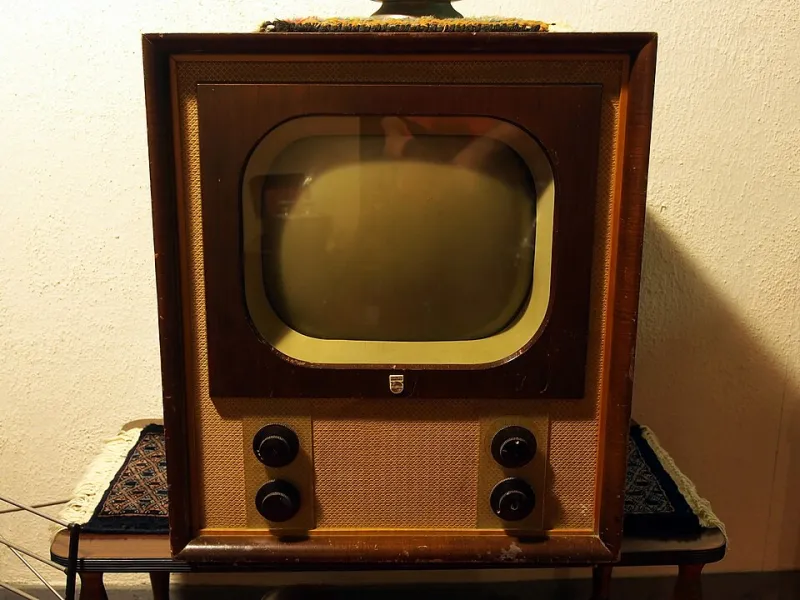
Photo: Unknown authorUnknown author, Public domain, via Wikimedia Commons
Somewhere between a 60-second TikTok clip and a Reddit thread that spiraled into 4,000 comments, television history is being rewritten. Shows that got cancelled after two seasons, cult favorites that never broke through to mainstream audiences, and prestige dramas that launched to critical silence are suddenly everywhere — discussed, debated, and devoured by viewers who weren't even watching TV when these things first aired.
This isn't a new phenomenon, exactly. Word-of-mouth has always driven rediscovery. But 2024 feels genuinely different, and if you spend any time on the fan side of social media, you probably already sense why.
The Algorithm as Archaeologist
Let's start with the mechanics. TikTok's recommendation engine doesn't care when something was made. It cares whether you'll watch it for more than three seconds. That time-agnostic quality means a clip from a 1997 sitcom can perform identically to a clip from last week's episode of something — and when it does, the platform keeps pushing it.
This creates a genuinely new dynamic for older content. A single viral scene can introduce a show to millions of people who have no preexisting relationship with it. No nostalgia required, no cultural context needed — just a moment that lands.
Reddit operates differently but achieves similar results. Subreddits dedicated to specific shows become self-sustaining communities that generate constant new discussion, pulling in curious newcomers who then binge the whole thing and come back with fresh takes. The r/Severance community, for example, grew explosively between the show's 2022 premiere and its second season, partly because the show's puzzle-box format is made for Reddit-style theorizing. New members joining in 2024 could scroll back through years of fan analysis, making the viewing experience richer than it was for early adopters.
Case Study: Arcane and the Proof of Concept
If you want to understand how a show achieves genuine mainstream crossover through social media momentum, Arcane is the clearest recent example. The League of Legends animated series launched on Netflix in late 2021 with a built-in gaming fanbase — but it quickly escaped that niche and became one of the most-discussed animated properties on the internet, period.
What made it work wasn't just the quality (though the animation is legitimately stunning). It was the way clips and scenes circulated on TikTok and Twitter, often completely divorced from the source material. People were reacting to a scene's emotional impact without knowing anything about the characters' backstory. That's a powerful form of advertising — one that no marketing budget can fully replicate.
By the time Season 2 arrived in late 2024, Arcane had become a cultural event. The gap between seasons, rather than killing momentum, actually amplified it. Social media kept the conversation alive for three years.
The 90s Sitcom Renaissance
Not every rediscovery story involves prestige animation or buzzy sci-fi dramas. Some of the most interesting second-life stories in 2024 involve shows from an era that predates streaming entirely.
Shows like NewsRadio, Sports Night, and Ned and Stacey have been quietly accumulating new fans on TikTok through the "comfort TV" trend — where creators post clips of warm, witty ensemble comedies as a counterpoint to the anxiety-inducing news cycle. These shows benefit from a specific quality: they were well-written enough to hold up, but obscure enough that discovering them feels like finding something secret.
For fans who want to go deeper, this is where comprehensive episode tracking becomes genuinely essential. When you fall into a 90s sitcom rabbit hole at 11pm, you want to know exactly how many episodes exist, which seasons are considered the strongest, and whether there's a clip show you can skip. A well-maintained database is the difference between a satisfying binge and a chaotic mess of incomplete information.
Does Viral Momentum Actually Save Shows?
Here's the more complicated question: can all this social media energy actually prevent cancellations or bring back cancelled series?
The honest answer is sometimes, but less often than fans hope.
The clearest success story is probably Brooklyn Nine-Nine, which was cancelled by Fox in 2018 and renewed by NBC within 31 hours — largely because the social media response was so immediate and overwhelming that it made the cancellation look like a mistake in real time. That's a genuine case where fan mobilization changed a business decision.
But for every Brooklyn Nine-Nine, there are dozens of campaigns that generated enormous online energy and went nowhere. Minx, The OA, I Am Not Okay With This — all shows with passionate online fanbases that couldn't translate digital affection into the streaming metrics that actually drive renewal decisions.
The 2024 landscape adds a wrinkle: the metrics that platforms use to evaluate shows have become more opaque, not less. Netflix famously guards its viewership data. That makes it harder for fan campaigns to make the case that a show is underperforming its potential, because nobody outside the company can verify the actual numbers.
What's Actually Different in 2024
So what makes this year feel distinct from previous waves of TV rediscovery?
A few things are converging simultaneously. First, the sheer volume of cancelled and forgotten content has never been higher — the streaming boom of 2018-2022 produced an enormous amount of programming that got minimal promotion and was quietly shelved. That's a massive catalog of potentially rediscoverable content waiting for the right viral moment.
Second, fan communities have gotten significantly better at organizing their enthusiasm. Dedicated Discord servers, coordinated rewatch campaigns, and collaborative fan wikis mean that when a show gains traction, there's infrastructure in place to sustain and grow that momentum.
Third — and this is where platforms like AllTM become part of the story — comprehensive media databases give newly converted fans a place to go deep. When someone watches three episodes of a 2003 drama on a whim and decides they need to know everything about it, they need a reliable episode guide, production history, and cast information. That resource didn't always exist. Now it does.
The Community Is the Canon
Maybe the most interesting shift in 2024 is philosophical: for a growing number of viewers, a show's "real" run isn't defined by its original broadcast window. It's defined by when they found it.
That's a fundamentally different relationship with television history than previous generations had. And it puts a premium on the kind of comprehensive, accurate, always-available documentation that makes rediscovery possible in the first place.
At AllTM, we track every title and every episode because we believe that a show's story doesn't end when it gets cancelled. Sometimes it's just beginning.